Maya is the oldest word for magic.

A first collection of ten rings · Each numbered by hand · Celuk, Bali

Follow the making — @__houseofmaya__

The Name

In its oldest use, the Sanskrit word māyā named magic — not sleight of hand, but the divine power to bring a form into being, and give the unseen something to be seen in.

We named our house for it.

The unseen, given a form you can hold.

sekala the seen
niskala the unseen

In Bali the two are held in daily balance. Every ring is both: silver you can see, and meaning you cannot.

II · The Village

A young house built on old hands.

Celuk sits in the rice country of southern Bali. For generations its families have worked silver the way their parents did — by hand, at forges that began in service of the temple.

The craft has its own language of rice and vines. Jawan — tiny spheres of silver, set one by one, each likened to a grain of rice. Bun — fine twisted wire that curls like a creeping vine. In 2019, Indonesia listed Celuk's silver craft as national cultural heritage.

It is also, quietly, disappearing — young hands leaving the forge for easier work. Every House of Maya piece is made here, in the old way. Every piece keeps a forge lit.
The silversmith's bench, Celuk. Plate A — to be photographed in Celuk

III · The Flower

In Bali the frangipani — jepun — is the flower of the daily offering, laid fresh each morning in the small woven trays called canang sari, tucked behind the ear after prayer.

It is the flower in our mark, cast in gold. And it gives its name to the first of our two ring designs.

An offering, made daily.

IV · The Stones

Our stones come from across one ocean, bought through a chain short enough to name. We know who sold us each stone, and whose hands cut it — the cutting given to the finest cutters we can find, one stone at a time. The record of every one is kept.

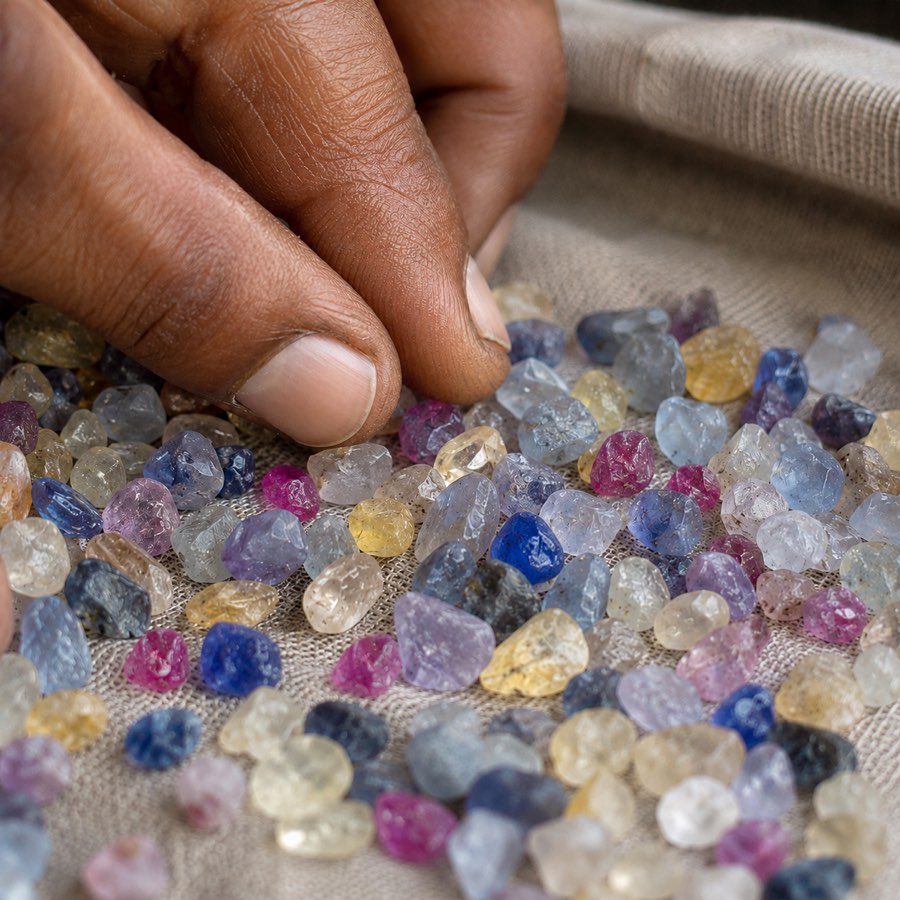
Hands sorting rough sapphires on a sorter's cloth.

Sri Lanka


The island the old traders called Serendib — the root of serendipity. Our sapphires are dug by hand near Ratnapura, from narrow pits shored with timber. No blasting, no chemicals; the pits are refilled and the land returned.

sapphire · hand-dug · traced

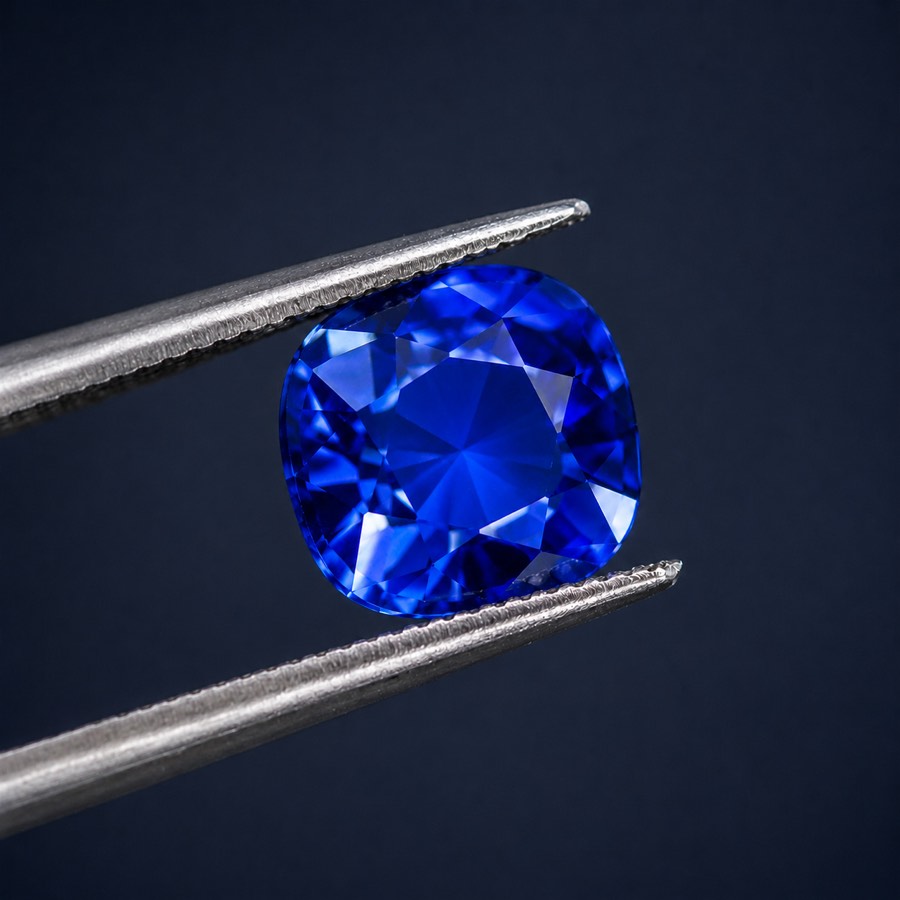
A single cut sapphire held in tweezers, macro.

Madagascar


An island of new-found earth — its gem fields are among the youngest in the world, discovered within living memory. Stones bought close to the ground, from the people who found them.

young earth · traced

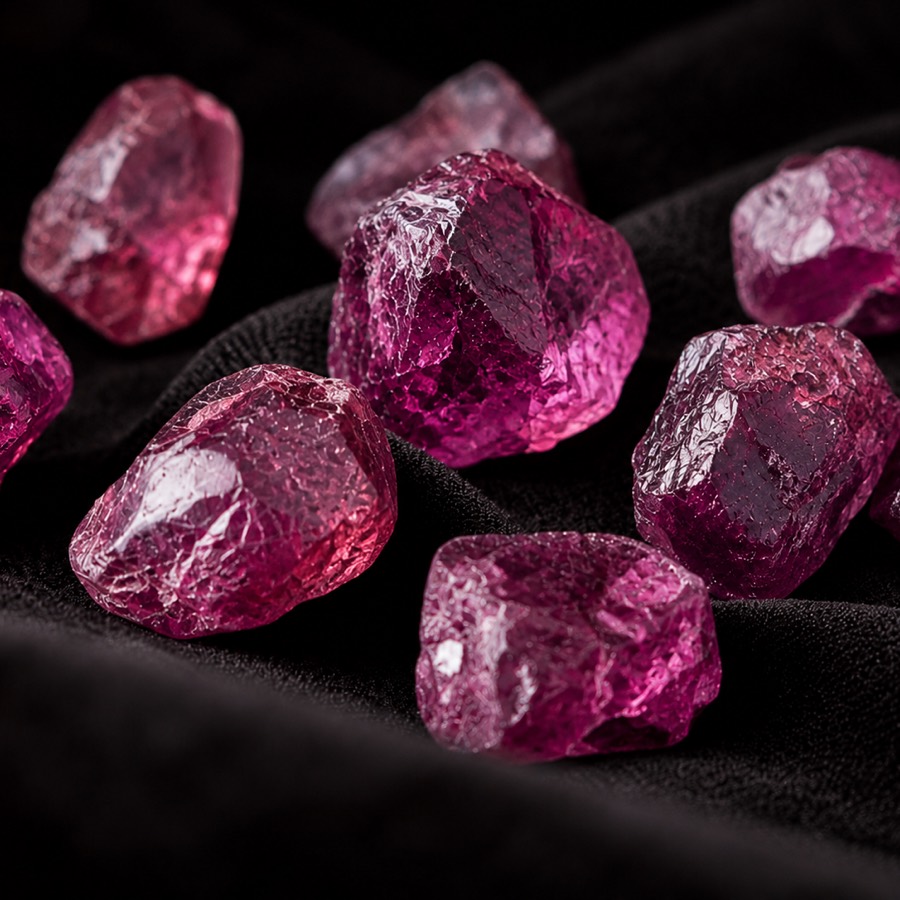
Rough garnets on dark cloth.

Tanzania


In the northeast, garnets come from small pits worked by small crews — mining at the scale of the hand, not the machine.

small pits · traced

Every stone here was chosen by eye — held, turned, kept or passed over, one at a time. Not bought by grade alone: chosen for colour, and for what it does in the light.

Traced mine to market. Named, not implied.

V · The Ten

Ten rings. Two designs. Every stone accounted for.

Jepun — the flower of the morning offering, made metal. Jawan — the silversmith's grain of rice, set in a ring. Four garnets. Six sapphires. Each numbered by hand.

  1. No. 1 of 10 Garnet
  2. No. 2 of 10 Garnet
  3. No. 3 of 10 Garnet
  4. No. 4 of 10 Garnet
  5. No. 5 of 10 Sapphire
  6. No. 6 of 10 Sapphire
  7. No. 7 of 10 Sapphire
  8. No. 8 of 10 Sapphire
  9. No. 9 of 10 Sapphire
  10. No. 10 of 10 Sapphire

Each ring leaves Celuk with its story written down.

And that is all of them. There is no eleventh in this ten.

Tri Hita Karana

A Balinese teaching: three harmonies make a good life.

With the divine a craft that began at the temple
Among people old hands, named and fairly paid
With nature stones dug gently, land returned

Ten stones. Ten rings. Then ten others, never these.